Your BCA PFI Notice Just Arrived. Here's Your 12-Week Action Plan.
Blog
30 December 2025

Your BCA PFI Notice Just Arrived. Here's Your 12-Week Action Plan.
The letter is not a warning. It is a starting gun.
A BCA facade inspection notice tells you that your building has reached its point in the Periodic Facade Inspection cycle and gives you a date by which the completed, endorsed report must be with BCA. What it does not tell you is that the work sitting between those two moments involves an appointment, an aviation permit, a survey, a hands-on inspection, a report, and a professional endorsement — several of which have lead times you cannot compress.
Most owners lose weeks discovering this in sequence. This plan runs them in parallel.
Before anything: read three things off the notice
Your submission deadline. Everything else works backwards from this date. Write it at the top of the file.
Your building's cycle position. The PFI regime applies to buildings more than 20 years old and over 13 metres tall, on a seven-year cycle. Landed houses used solely as residences, temporary buildings, and buildings 13 metres or lower are outside the regime. If you believe the notice has reached you in error, raise it immediately rather than at week ten.
Who is actually responsible. For a private building it is the owner. For strata-titled property — most condominiums, many commercial and mixed-use developments — it is the MCST, acting through the council and the managing agent. If your building is strata-titled, the approval path runs through the council, and that path has its own calendar.
The twelve weeks below are a planning schedule, not a statutory one. If your notice gives you longer, you have breathing room. If it gives you less, the sequence still holds — you compress the buffers, not the lead times.
Weeks 1–2: Appoint your Competent Person
Nothing else can start until this is done, because the Competent Person owns the inspection.
Under the PFI regime you must appoint a Competent Person — a Professional Engineer or a Registered Architect — who may be assisted by a Facade Inspector. Both the CP and the FI must have completed and passed a BCA-approved Certificate of Facade Inspection course.
What to establish before you sign:
Availability against your specific deadline. CPs cluster out around common deadline periods. Ask directly whether they can complete and endorse by your date, not whether they are "generally available."
Their position on drone building inspection. Some CPs work with accredited UAS providers routinely; others prefer traditional access. This decision shapes your cost and programme, so have the conversation now rather than after appointment.
Scope of what they are quoting. Full visual inspection of every elevation plus representative hands-on inspection is the statutory minimum. Confirm what is included and what is a variation.
Who handles the submission. Some CPs manage the e-Form and submission end to end. Some hand you a report and leave the filing to you.
Parallel task: start assembling your building's history — previous inspection reports, known defect areas, repair records, as-built drawings, TOP documentation. Anything showing what was found last cycle materially improves this one.
Weeks 2–4: Engage the inspection provider and start the permit clock
This is the step that catches people out, and it is the reason this plan exists.
If drone building inspection is being used for the visual stage, the Commissioner of Building Control has approved unmanned aircraft systems operated by accredited UAS service providers. Accreditation is verifiable through the Singapore Accreditation Council website, and the industry is encouraged to engage only accredited providers. Verify it yourself — do not accept a claim on a brochure.
Two clocks start here:
The aviation permit clock. Commercial drone operations in Singapore require CAAS permits, and processing runs to several weeks. Singapore's airspace is heavily managed around Changi, Seletar, Paya Lebar and Tengah, so an address-level feasibility check should happen before anything is scheduled. If your building sits in constrained airspace, you need to know in week three, not week nine.
The notification clock. Before carrying out visual inspection using accredited UAS, the CP must notify the Commissioner of Building Control by indicating the UAS details in the prescribed e-Form. Confirm who is filing this and when.
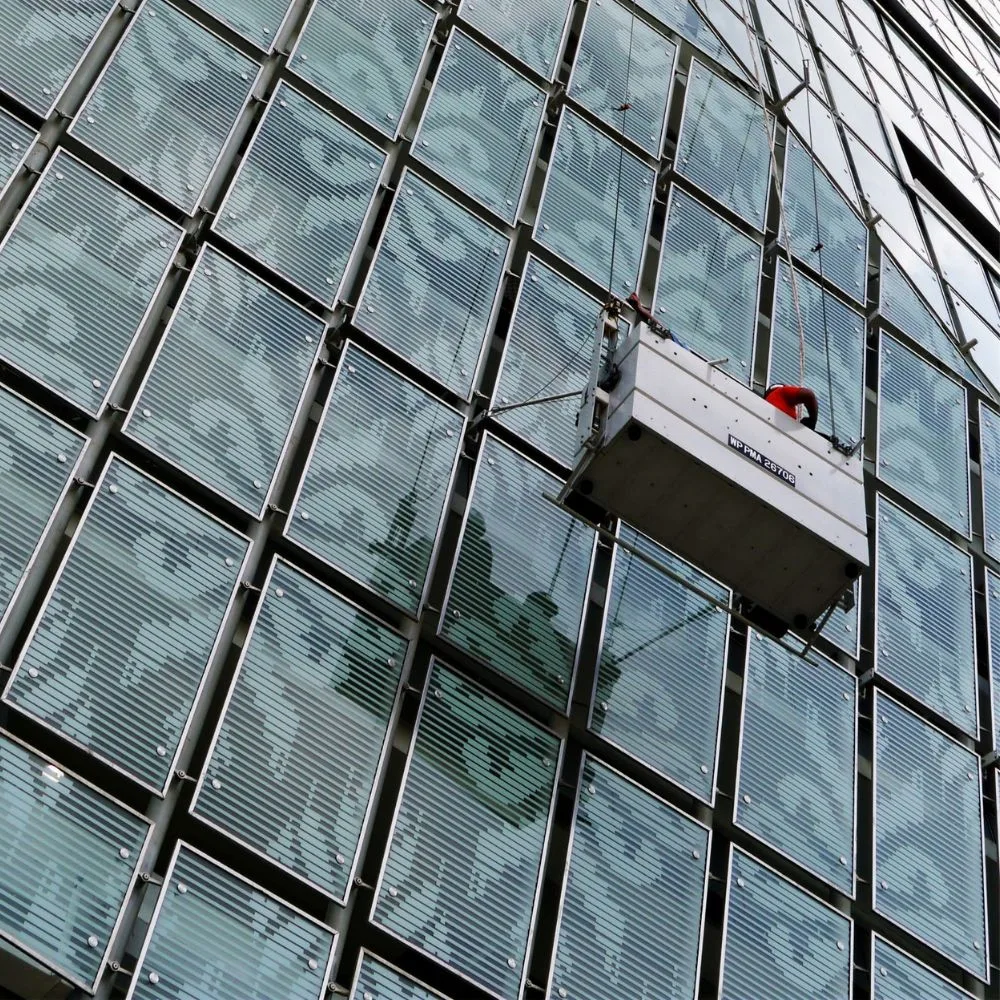
Also settle the access arrangements for the hands-on portion. The representative hands-on inspection of each elevation still requires physical access — gondola, rope access or a cradle. Booking that equipment is its own lead time, and it is frequently forgotten until the drone data comes back.
Worth knowing about the CP's duties, because it affects your programme: the CP must be present — or have their supervised Facade Inspector present — during UAS operations, and must personally review all inspection outputs including photographs, images, readings and reports. The CP is not a signature at the end. Their diary has to align with the flight days.
Weeks 4–6: Prepare the building and the people in it
Notify residents and tenants. For condominiums this is not optional in practice, whatever the legal position. Drone operations are brief and far less intrusive than scaffolding, but people notice an aircraft outside their bedroom window. A notice explaining what is happening, when, and why prevents most complaints. Address privacy directly — state that the survey is directed at the building envelope and ask your provider for their data handling policy in writing.
Clear what can be cleared. Vegetation obstructing elevations, awnings, temporary structures, items on balconies and roof clutter all create blind spots that will appear in your report as areas not inspected.
Sort ground logistics. Take-off and landing zones need to be cordoned. Identify them with your provider and confirm with your managing agent.
Confirm the hands-on access plan with whoever is providing the equipment.
Weeks 6–8: The survey
Drone visual survey of a typical building is a matter of days rather than weeks. Weather is the main variable — rain and high wind stop flying, so build in spare days rather than scheduling to the last available slot.
Sequence that works well:
Full aerial visual survey of every elevation and the roof, at the required image resolution.
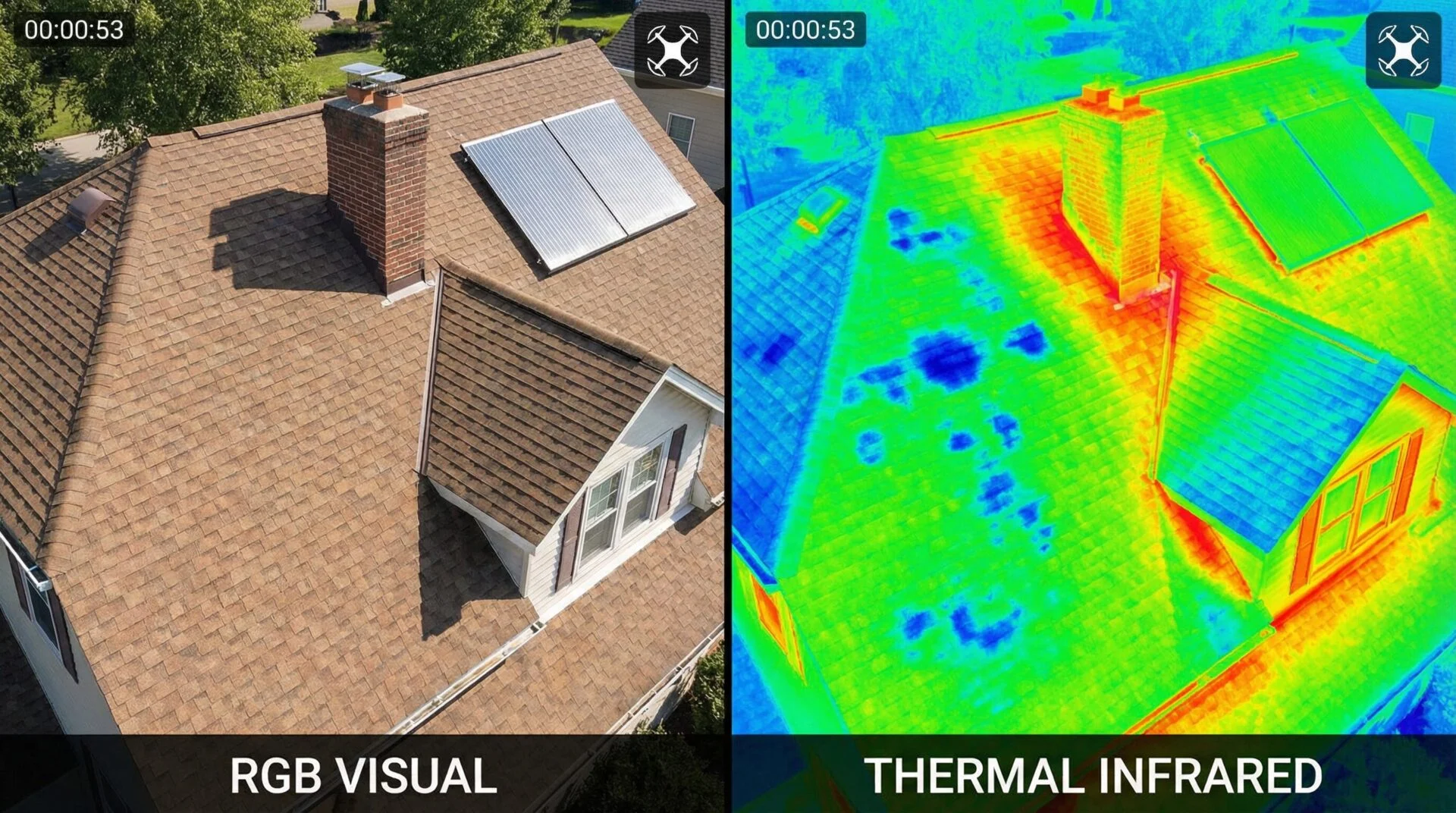
Thermal survey if your facade is tiled, rendered or clad — the strongest indicator that subsurface defects are worth looking for.
Preliminary review by the CP to identify anomaly concentrations.
Hands-on inspection targeted at what the survey flagged, satisfying the representative sampling requirement while actually going where the problems are.
That last point is where a well-run inspection separates from a box-ticking one. The sampling requirement is the same either way. Choosing locations from data rather than convenience costs nothing extra.
Weeks 8–11: Report, review, endorsement
The CP compiles the defect register, severity classifications, annotated imagery and elevation mapping, then reviews and endorses.
Build in a genuine review window. If the CP wants additional investigation on a critical defect — a closer look, a test, a second visit — that has to be possible without breaching your deadline. Scheduling endorsement for the day before submission removes that option entirely.
Read the draft yourself. You are the one who will fund the rectification works.
Week 12: Submission, then rectification planning
Submit the endorsed report by the date on your notice.
Then start on the part that actually costs money. Defects identified must be rectified within the timeframe specified, and evidence of completed repairs may be required as follow-up. Rectification is almost always the larger number — begin scoping and tendering as soon as the findings are known, not after the report is filed.
The five things that cause missed deadlines
Starting the CP search in week six. Appointment is the bottleneck for everything downstream.
Discovering the permit lead time late. Weeks, not days, and airspace constraints may not be solvable at all at some addresses.
Forgetting the hands-on access booking. The drone data arrives and there is no gondola available for six weeks.
No weather buffer. One monsoon week is enough to break a schedule with no slack.
Assuming the report is the end. Rectification has its own deadline, and it needs budget you may not have allocated.
If your notice gives you less than twelve weeks
Compress in this order: shorten the resident notification window, shorten the report review buffer, run thermal and visual capture in the same mobilisation, and accept a tighter weather margin.
Do not compress: the CP appointment, the permit application, or the hands-on access booking. Those are external clocks. Call your provider on day one and tell them the deadline — a good one will tell you immediately whether it is achievable, and that is more useful than a quotation.