What Drone Facade Inspection Actually Costs in Singapore
Blog
18 December 2025

What Drone Facade Inspection Actually Costs in Singapore
Almost nobody publishes facade inspection prices, which is why almost everybody assumes the worst.
The honest position is that a facade inspection quotation is not a single number with a markup on it. It is an access cost plus an inspection cost plus a reporting cost, and access is usually the largest of the three. Change how you reach the building and the total moves dramatically.
So here is what drives the price, what the four access methods cost relative to each other, and what to check before you accept anything.
The four access methods, compared
Method | Relative cost | Duration | Data quality | Safety exposure |
|---|---|---|---|---|
Drone | Lowest | Days | Systematic, geotagged, high-resolution, thermal optional | Effectively none at height |
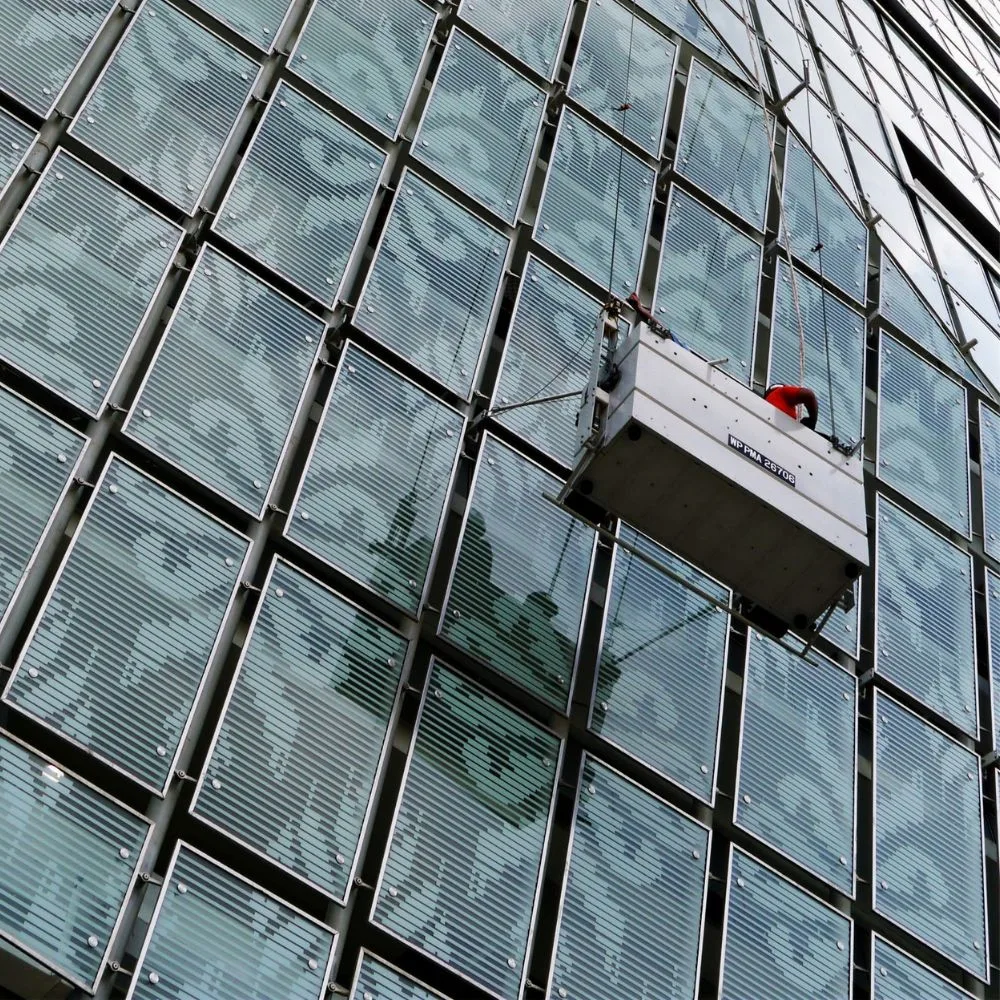
Rope access | Moderate | 1–2 weeks | Close-range visual, hand-held photography | High |
BMU / gondola | Moderate to high | 1–2 weeks | Close-range visual, drop-by-drop | Moderate |
Scaffolding | Highest | Weeks | Close-range visual, full tactile access | Moderate |
Published Singapore provider pricing suggests a drone-led facade inspection on a mid-rise building typically lands in the low single-digit thousands, with rope access several times that, gondola higher again, and full scaffolding an order of magnitude above drone — often tens of thousands. Treat all of these as indicative rather than quotable: geometry and site constraints move them substantially.
Two important caveats on that table.
Cheapest is not always sufficient. Drone survey covers the visual stage. The Periodic Facade Inspection regime also requires a representative hands-on inspection of each elevation, and that needs physical access. A quotation that shows only a drone line item and no hands-on provision is either incomplete or assuming someone else is paying for it.
Scaffolding is not simply a worse deal. If your building is already going to be scaffolded for repainting or facade repair, the marginal cost of inspecting from it is small. Sequencing matters more than the headline rate.
What actually drives your price
Height and elevation count
Access cost scales with height for every traditional method — more rigging, more drops, more time. It scales far more gently for drone survey, which is why the saving widens as buildings get taller. A four-storey block sees a modest difference between methods. A thirty-storey tower sees a large one.
Elevation count matters independently. A simple rectangular slab has four faces. A building with setbacks, wings, light wells and internal courtyards may have twelve surfaces requiring separate treatment.
Geometry and obstruction
Deep recesses, projecting fins, light shelves, heavy vegetation and closely spaced sun-shading all slow capture and create blind spots that need additional passes. Complex geometry is the single most underestimated cost driver in facade work.
Airspace and permit complexity
Commercial drone operations require CAAS permits, and Singapore's airspace is tightly managed around Changi, Seletar, Paya Lebar and Tengah. A straightforward address is a routine application. A constrained one requires more documentation, more lead time, and sometimes operational restrictions that add flight days. Occasionally an address will not support drone operations at all — which is a feasibility question, not a pricing one, and should be answered before you are quoted.
Thermal add-on
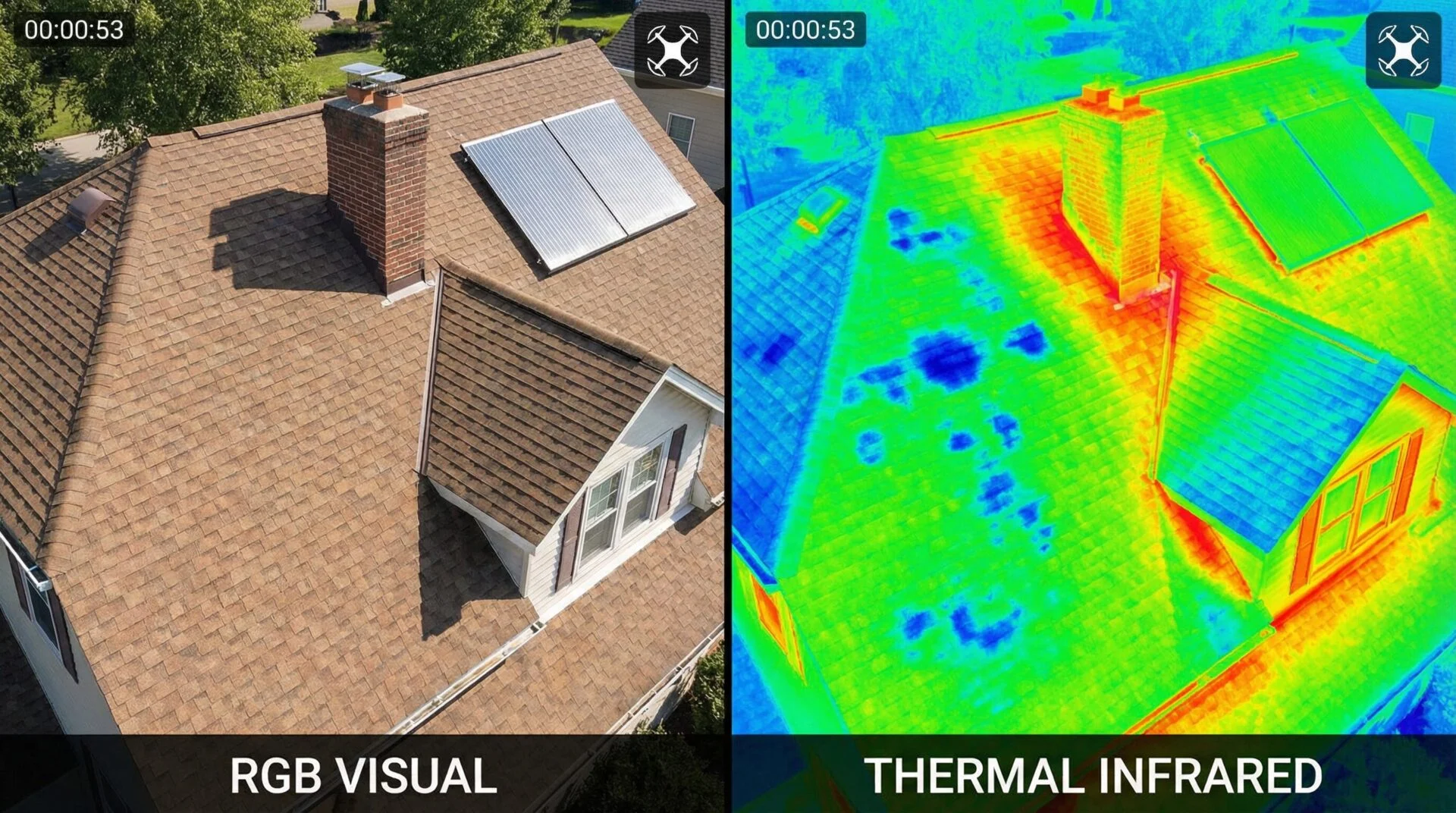
Adding a thermal survey is a premium over visual-only, and the premium is not only equipment. Thermography requires a thermal gradient, which means multiple passes timed to each elevation's heating and cooling window rather than one continuous sweep. More site time, sometimes across more days, occasionally after dark.
Worth it if your facade is tiled, rendered or clad. Largely unnecessary on fair-faced concrete with no defect history.
Accreditation and qualification of the team
Where drone building inspection supports a PFI submission, the Commissioner of Building Control has approved UAS operated by accredited service providers, verifiable through the Singapore Accreditation Council. Accreditation carries real overhead — documented quality management, competence records, audit. A meaningfully cheaper quotation from a non-accredited operator is cheaper for a reason, and the risk lands on you if the data is not accepted.
Reporting depth
A defect register with annotated imagery, severity classification and elevation mapping takes professional time. So does the CP's review — and that review is a duty, not a formality: the Competent Person must personally review all inspection outputs including photographs, images, readings and reports. More images means more review, not less.
Occupancy and working hours
Restricted working windows, night operations, and coordination around a live retail or commercial building all add cost. Sometimes they are unavoidable and worth paying for.
Where the money goes on a drone-led inspection
Roughly, and it surprises people:
Mobilisation, permits and planning — a meaningful fixed component, largely independent of building size
Flight time — usually the smallest line
Hands-on access for representative sampling — often the largest single line
Data processing and defect identification — scales with building size
CP review and endorsement — professional fees, scales with complexity
Report production — moderate, largely fixed
The flight is cheap. The permits, the professional review, and the physical access to the sampled areas are where the budget actually sits. Which is exactly why removing access from the visual stage saves so much: it takes the biggest line item and applies it only where hands are genuinely required.
Getting a quotation you can compare
Ask every provider for the same six things, and differences become visible:
Is the hands-on portion included, excluded, or coordinated with a third party? The most common source of quotations that aren't comparable.
What image resolution is delivered? BCA requires defect photographs at 0.15 cm/pixel or finer. Ask for the number, not a description.
Are you SAC-accredited for building facade inspection using UAS, and can I verify it?
Who applies for CAAS permits, and what is the lead time?
Is CP review and endorsement inside this price, or a separate appointment?
What happens if weather costs us days? Fixed price or day rate — this is where quotations diverge in practice.
The cost people forget
The inspection is not the expense. The rectification is.
An inspection that finds nothing has told you something valuable. An inspection that finds a great deal has just handed you a works programme, and that programme will usually cost a multiple of the survey that identified it. For MCSTs, this is the item that produces emergency levies — not the inspection fee, the repairs behind it.
Budget for both from the start. And note the compounding argument: interim surveys between statutory cycles cost a fraction of a full inspection and catch deterioration while it is still a sealant repair rather than a spall. Spending a little more often is generally cheaper than spending a lot rarely.
The bottom line
Facade inspection cost in Singapore is dominated by how you reach the building, not by how long you look at it. Drone survey removes that cost from the visual stage, which is why it is consistently the cheapest route to a compliant inspection — and why the gap widens the taller and more awkward your building is.
Compare quotations on scope, not on the headline number. The cheapest quotation that excludes the hands-on inspection is not cheap; it is incomplete.