The Ideal Frequency of Building Inspections You Should Follow
Blog
3 August 2026

The Ideal Frequency of Building Inspections You Should Follow
Most building owners in Singapore ask the wrong question. They ask, "When is my inspection due?" The better question is, "How often should I actually be looking at my facade?"
Those are two different numbers. One is a legal floor. The other is what keeps concrete off the pavement.
The legal minimum: what BCA requires
Singapore's Periodic Facade Inspection (PFI) regime came into force following amendments to the Building Control Act passed in March 2020. The regime requires buildings more than 20 years old and over 13 metres tall to undergo regimented facade inspection every seven years.
The scope is broad. PFI applies to all buildings except detached, semi-detached, terraced or linked houses used solely as residences; temporary buildings; and buildings whose highest point is 13 metres or lower measured from the ground.
So if you manage a condominium, a strata office block, a hotel, a shopping centre, an industrial building or a mixed-use development that has passed its twentieth year, you are in scope — and the clock resets every seven years from your last inspection.
Facade inspection sits alongside the older Periodic Structural Inspection (PSI) regime, which covers the structural frame rather than the external envelope. The two run on separate cycles and separate submissions. Owners frequently assume that clearing one clears the other. It does not.
Who is allowed to do it
The PFI regime requires responsible parties to appoint a Competent Person — a Professional Engineer or Registered Architect — who may be assisted by a Facade Inspector. Both must complete and pass a BCA-approved Certificate of Facade Inspection course. The Competent Person carries out a full visual inspection and a representative hands-on inspection of each elevation, using technology such as drones, borescopes and scanning equipment for greater efficiency.
Drones are not a workaround for the Competent Person. They are a tool the CP uses. The Commissioner of Building Control has approved the use of unmanned aircraft systems operated by accredited UAS service providers for the visual inspection of building facades. CPs must notify the CBC of UAS details in the prescribed e-Form, must be present (or have their supervised Facade Inspector present) during UAS operations, and must personally review all inspection outputs including photographs, images, readings and reports.
Why seven years is a floor, not a target
Seven years is a regulatory compromise. It reflects what is enforceable across a national building stock — not what is optimal for any individual building.
Consider what happens to a facade in Singapore over seven years:
Chloride-driven corrosion. Coastal humidity and airborne salt drive chloride into concrete cover. Once reinforcement starts corroding, expansion cracks the cover from the inside. Spalling follows.
Thermal cycling. Air-conditioned interiors against 32°C exteriors put constant stress on sealant joints, glazing gaskets and panel fixings.
UV degradation. Sealants and coatings on the equatorial belt age faster than the same products in temperate climates. Manufacturer warranties written for Europe do not transfer cleanly.
Monsoon loading. Driving rain finds every failed joint, and water ingress accelerates everything above.
A hairline crack in year two is a sealant repair. The same crack in year seven may be a spall, a corroded anchor, and a scaffolding job.
The frequency schedule we recommend
Think in three tiers.
Tier 1 — Statutory inspection: every 7 years. Full PFI as required by BCA. Competent Person appointed, full visual survey of every elevation, representative hands-on inspection, report submitted. Non-negotiable.
Tier 2 — Interim aerial condition survey: every 2 to 3 years. A drone-based visual survey of all elevations, benchmarked against the previous survey. This is not a statutory submission — it is asset management. It catches deterioration early enough that repairs stay in the maintenance budget rather than becoming a special levy. For an MCST, a three-year interim survey typically costs a fraction of the eventual repair it prevents.
Tier 3 — Targeted review: annually, or after any trigger event. Trigger events include: a reported falling object, visible staining or efflorescence, a leak reported by a unit owner, a major storm, or completion of adjacent construction or piling works. Any of these warrants a look — usually at specific elevations rather than the whole building.
Adjusting for building-specific risk
Move your interim survey earlier if your building has:
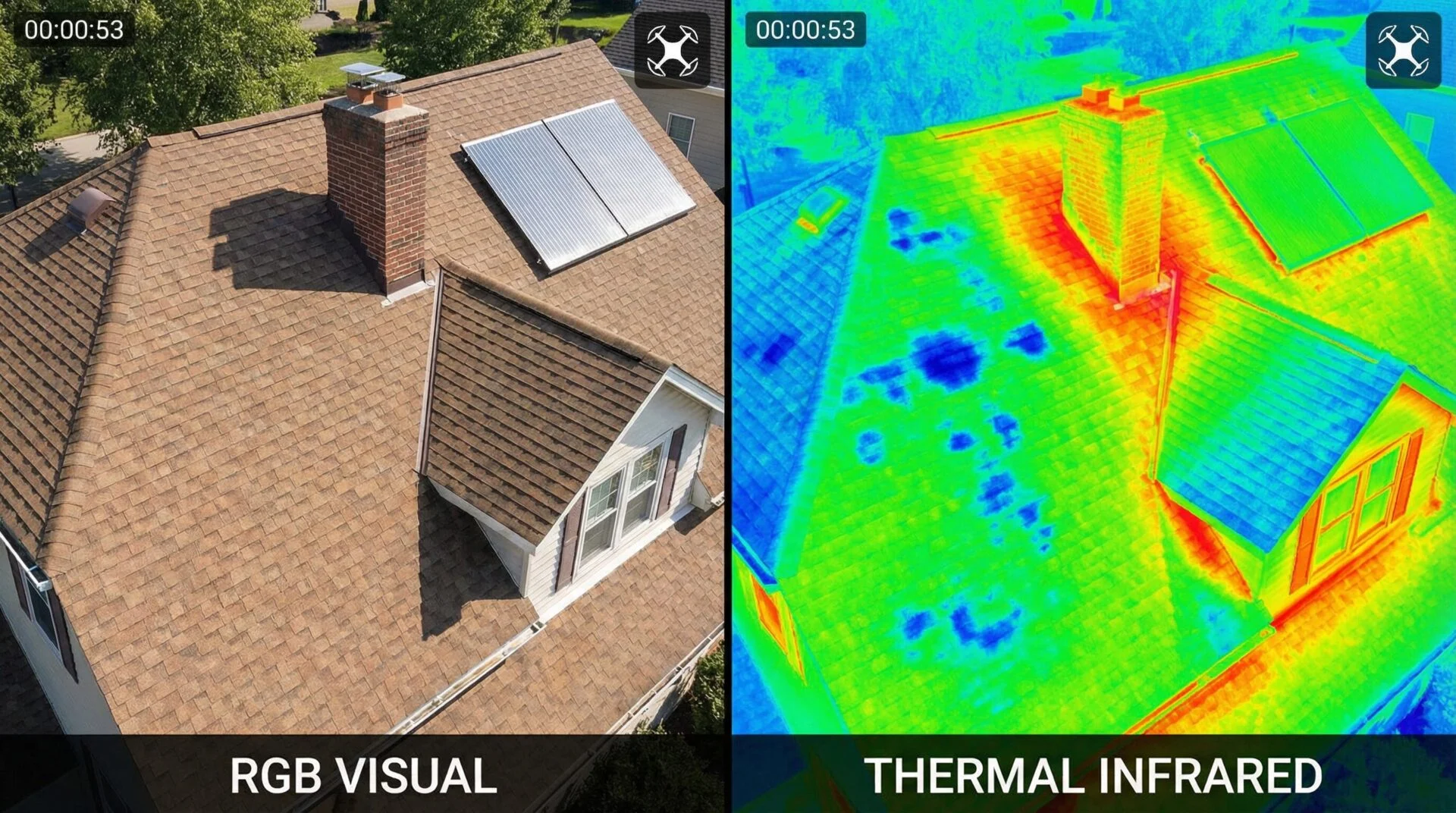
Applied finishes over concrete (render, tiles, stone cladding) rather than fair-faced concrete. Adhesion failure is the single most common source of falling facade elements, and it is often invisible until it isn't — which is why clad and rendered facades are the strongest case for adding thermal imaging to the survey.
Curtain wall or unitised glazing with structural silicone. Sealant has a defined service life, typically 15 to 20 years, after which it is a scheduled replacement, not a defect.
High pedestrian exposure — frontage onto a walkway, drop-off, playground or carpark. The consequence of failure, not just the probability, should set your frequency.
A coastal or industrial location. East Coast, Tuas, Jurong Island: higher chloride and pollutant load.
Previous defect history. A facade that spalled once will spall again in the same conditions.
Building the schedule into your budget
For MCSTs, the practical failure mode is not ignorance of the rules — it is cash flow. A PFI cycle lands in one financial year and nobody planned for it.
Work backwards from your TOP date. Identify the year your building crosses 20 years, then map the seven-year cycles forward. Put the statutory inspection into your sinking fund plan as a known, dated line item. Put the interim aerial surveys into your annual maintenance budget as recurring operational cost. Then add a contingency for the rectification works that a good inspection will find — because finding nothing is not the goal.
Engagement lead time matters too. Aviation permits for commercial drone operations in Singapore require processing time, and Competent Persons book out ahead of common deadline clusters. Starting the process a couple of months before your BCA deadline is comfortable. Starting it two weeks before is not.
The bottom line
Comply at seven years because you must. Inspect at two to three because it is cheaper. Look immediately when something changes, because that is when the cost of waiting is highest.
The buildings that get expensive are not the ones that fail inspection. They are the ones that passed seven years ago and were never looked at since.